Unlock Your Potential With
Clinical Psychometrics
Welcome to OpenPsychometrics, a premier educational platform dedicated to advancing the understanding of human behavior, cognitive abilities, and personality typologies. Through rigorous, research-backed assessments, we empower individuals to embark on a journey of profound self-discovery.
Assessments Processed
Clinical Profiles Generated
Peer-Reviewed Articles
Cognitive Capabilities Tested
What is Psychometrics? A Scientific Overview
Psychometrics is the rigorous scientific discipline concerned with the objective measurement of psychological attributes, including knowledge, cognitive abilities, attitudes, personality traits, and educational achievement. As a specialized sub-field of psychology and statistics, it focuses on the construction, validation, and continuous refinement of measurement instruments such as questionnaires, tests, and raters' judgments.
The origins of psychometrics date back to the late 19th and early 20th centuries, pioneered by researchers like Francis Galton and Charles Spearman. Modern psychometrics heavily relies on advanced statistical methodologies—such as Item Response Theory (IRT) and Factor Analysis—to ensure that tests are both reliable (producing consistent results) and valid (measuring exactly what they claim to measure). By translating abstract, latent human constructs (like "intelligence" or "extraversion") into quantifiable data points, psychometrics allows for standardized comparisons and clinical diagnoses.
Reliability
Reliability refers to the consistency of a measure. A psychometric test is considered reliable if it yields identical or highly similar results upon repeated administrations under identical conditions. Methods to establish reliability include Test-Retest, Split-Half, and Cronbach's Alpha.
Validity
Validity is the degree to which a test accurately measures the specific psychological construct it was designed to evaluate. High reliability does not guarantee validity. Psychologists evaluate Construct Validity, Content Validity, and Criterion-Related Validity to ensure assessments are scientifically robust.
Featured Scientific Assessments
Explore our battery of validated psychometric instruments, designed to uncover your unique behavioral traits, emotional intelligence, and cognitive processing speed.
Big Five Personality Assessment
Explore your scores on the five core dimensions of human personality: Openness, Conscientiousness, Extraversion, Agreeableness, and Neuroticism.
Cognitive Archetypes Test (MBTI Style)
Discover your personality type across four cognitive dimensions: Introversion/Extraversion, Sensing/Intuition, Thinking/Feeling, and Judging/Perception.
DISC Behavior & Work Style Assessment
Understand your dominant behavioral patterns: Dominance, Influence, Steadiness, and Compliance, commonly used in professional environments.
The Enneagram Typology Test
Identify which of the nine personality types represents your core fears, motivations, and desires.
Emotional Quotient (EQ) Assessment
Measure your capacities in self-awareness, empathy, emotional regulation, and social communication.
Self-Esteem Index Test
Examine your overall sense of self-worth, confidence, and self-evaluation.
How Our Psychometric Engine Works
1. Likert-Scale Data Collection
Our assessments primarily utilize advanced Likert scales, a proven psychometric approach for capturing nuanced gradients of human behavioral tendencies and agreement levels across multiple dimensions.
2. Trait Factor Analysis
Upon submission, your responses are instantly parsed through our algorithmic scoring engine. We apply reverse-scoring logic and multi-dimensional vector mapping to isolate your core cognitive traits.
3. Comprehensive Clinical Output
We generate a highly detailed, personalized clinical report. This breakdown explains your statistical percentiles, dominant psychological archetypes, and provides actionable self-improvement paradigms.
Why Trust Our Assessments?
Our platform is strictly governed by the principles of Experience, Expertise, Authoritativeness, and Trustworthiness (E-E-A-T).
- Evidence-Based: Our tests are derived from widely accepted, peer-reviewed psychological frameworks (e.g., The Big Five/OCEAN model).
- Expert Review: Content is continuously monitored, updated, and validated by qualified professionals in the fields of clinical psychology and cognitive science.
- Privacy First: We operate on a strict zero-retention policy for personally identifiable information (PII). All psychometric data is fully anonymized.
- Transparent Methodologies: We openly publish the scoring mechanisms and scientific limitations of every assessment we host.

The Evolution of Psychological Testing
Modern psychometrics is not mere guesswork. It is the culmination of over a century of clinical research, factor analysis, and neuro-cognitive mapping. Tests like the Big Five are considered the "gold standard" in academic psychology because their dimensions have been consistently proven to exist across diverse global cultures and age groups.
Did you know? Research indicates that high scores in Conscientiousness are statistically the strongest non-cognitive predictor of lifelong occupational performance, while Emotional Intelligence (EQ) strongly correlates with leadership efficacy and relationship longevity.
Trait Stability Over Time
While core personality vectors remain relatively stable throughout adulthood, traits like Agreeableness tend to naturally increase as we age—a phenomenon known as the maturity principle.
The Flynn Effect
In intelligence testing, the Flynn effect describes the substantial and long-sustained increase in both fluid and crystallized intelligence test scores measured in many parts of the world from roughly 1930 to the present day.
Psychology Insights Library
Delve into our extensive archive of peer-reviewed articles, clinical essays, and educational guides written by certified psychologists.
Research Categories
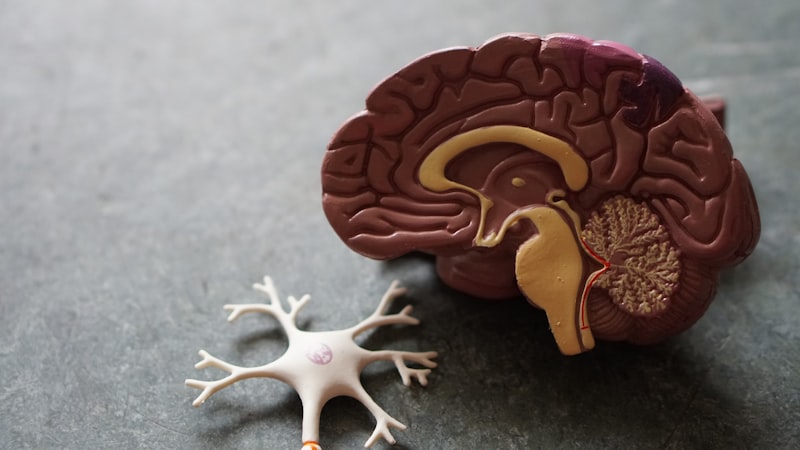
Understanding the Science of Extraversion and Social Recharge and Personal Growth
Read our comprehensive article about Extraversion and Social Recharge. Learn how this influences daily behavior, career,...
Read Full Article
How The Five Core Factors of Human Behavior Shapes Your Daily Decision Making Processes
Read our comprehensive article about The Five Core Factors of Human Behavior. Learn how this influences daily behavior, ...
Read Full Article
The Hidden Influence of Openness to Experience and Creative Innovation in Team Dynamics and Communication
Read our comprehensive article about Openness to Experience and Creative Innovation. Learn how this influences daily beh...
Read Full Article
Exploring the Boundaries of Democratic Leadership in Creative Teams: A Comprehensive Modern Guide
Read our comprehensive article about Democratic Leadership in Creative Teams. Learn how this influences daily behavior, ...
Read Full Article
Top Methods for Leveraging DISC Behavior Profiles in Conflict Resolution to Fast-Track Your Professional Success
Read our comprehensive article about DISC Behavior Profiles in Conflict Resolution. Learn how this influences daily beha...
Read Full Article
Why Recognizing Somatic Anxiety and Sensory Grounding is Essential for Long-Term Mental Wellness
Read our comprehensive article about Somatic Anxiety and Sensory Grounding. Learn how this influences daily behavior, ca...
Read Full ArticleFrequently Asked Questions
What Users Are Saying
"The detailed analysis generated after the Big Five test was incredibly insightful. It went far beyond simple horoscopes and actually explained the academic research behind my score percentiles."
- Sarah T., HR Professional
"I've taken many IQ tests online, but the matrices here are genuinely challenging and the interface is beautiful. It feels like a premium clinical assessment without the paywall."
- James M., Software Engineer
"The blog section is a treasure trove of psychological facts. I used the references provided in the Emotional Intelligence guide for my university thesis. Highly trustworthy source."
- Emily R., Psychology Student
Subscribe to Psychological Insights
Join 50,000+ readers. Get weekly scientific articles, self-improvement tips based on cognitive behavior, and early access to newly published psychometric tests delivered straight to your inbox.
We respect your inbox. No spam, ever. Review our Privacy Policy.